

[caption id=“” align=“alignnone” width=“1023”]
Where a lot of rebrands start: CEO with an “amazing” idea.
Ever walked past a store and thought: “Wait, when did they change their logo?”
That’s usually the first sign of a rebranding fail.
I’ve seen countless rebrands, not just in my 15+ years working with brands like Heineken and Ray-Ban. Want to know what I think? Most companies mess it up because they focus on the wrong things.
The Ugly Truth About Rebranding
Here’s what typically happens:
- CEO sees competitor’s fresh look
- Marketing team scrambles
- New logo gets designed
- Everyone hates it
- Money wasted
Sound familiar?
What Actually Works in Rebranding
(From Someone Who’s Been There)
Leading the creative team for Beerwulf (Heineken’s D2C brand), I learned that successful rebranding isn’t about pretty designs. It’s about three things:
1. Understanding Why
- Are you losing market share?
- Has your audience changed?
- Did your mission evolve?
Don’t rebrand just because your logo looks “old.” That’s like buying a new car because you’re bored with the color.
Explicit mention: YOU are. You didn’t ask the world around you that’s also seeing that same car.
2. Inside-Out Approach
Most companies do this backwards. They start with visuals instead of values. In any project, I always began with the team. Why? Because your employees are your first brand ambassadors. If they don’t buy it, neither will your customers.
**3. Gradual Evolution **
Remember when Instagram changed their logo overnight? Everyone freaked out. Then a week later, nobody cared. But that only works if you’re Instagram.For most brands, subtle evolution beats dramatic change. Think Ray-Ban , their logo hasn’t changed much since the 1930s, but their brand keeps evolving.
The Million-Dollar Question
Ok, for most companies, this might not be a million dollar question, but at least hundreds.
☞ Want to know if you really need a rebrand?
Ask yourself:
“If I removed all logos from my product and my competitor’s, would customers still choose mine?”
If the answer is no, you don’t have a brand problem. You have a product problem. Sure branding can help sell something as basic as salt, but it only goes so far, for so long.
What Now?
Consider this. 80% of companies thinking about rebranding shouldn’t do it. Yeah, I said it. They should focus on fixing their customer experience first.
But if you’re in the 20% who genuinely need it, start here:
- Survey your employees
- Talk to your customers (actually talk, don’t just send surveys)
- List what’s working (don’t fix what isn’t broken)
- Define your “why” (if it’s “because our logo looks old,” go back to step 1)
Example of a rebrand no one needed
Between you and me, I really wish a lot more companies would have looked at step 4 above. So many great logo’s were killed, simply because someone thought “it was time to move along with time”.
Like this one, UPS:
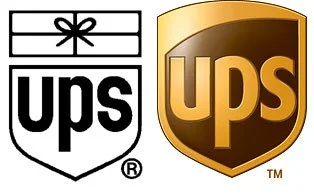Left, the logo from the 60’s, right, the current thing.
Sure, in black and white it doesn’t look awesome, but it says a lot. Overall you see:
- A shield, as in UPS guards whatever you sending.
- A ship with cargo on it. The ship says UPS on it. What does it tell you: “we move whatever you want to send”
- The package on top. Crystal clear on what it does right?
Anyhow…
Let’s Talk
What’s your take? Have you seen any rebrands that made you think “what were they thinking?” I’d love to hear your worst rebrand stories.
And if you’re considering a rebrand, please do remember this: your brand isn’t your logo. It’s what people say about you when you’re not in the room.